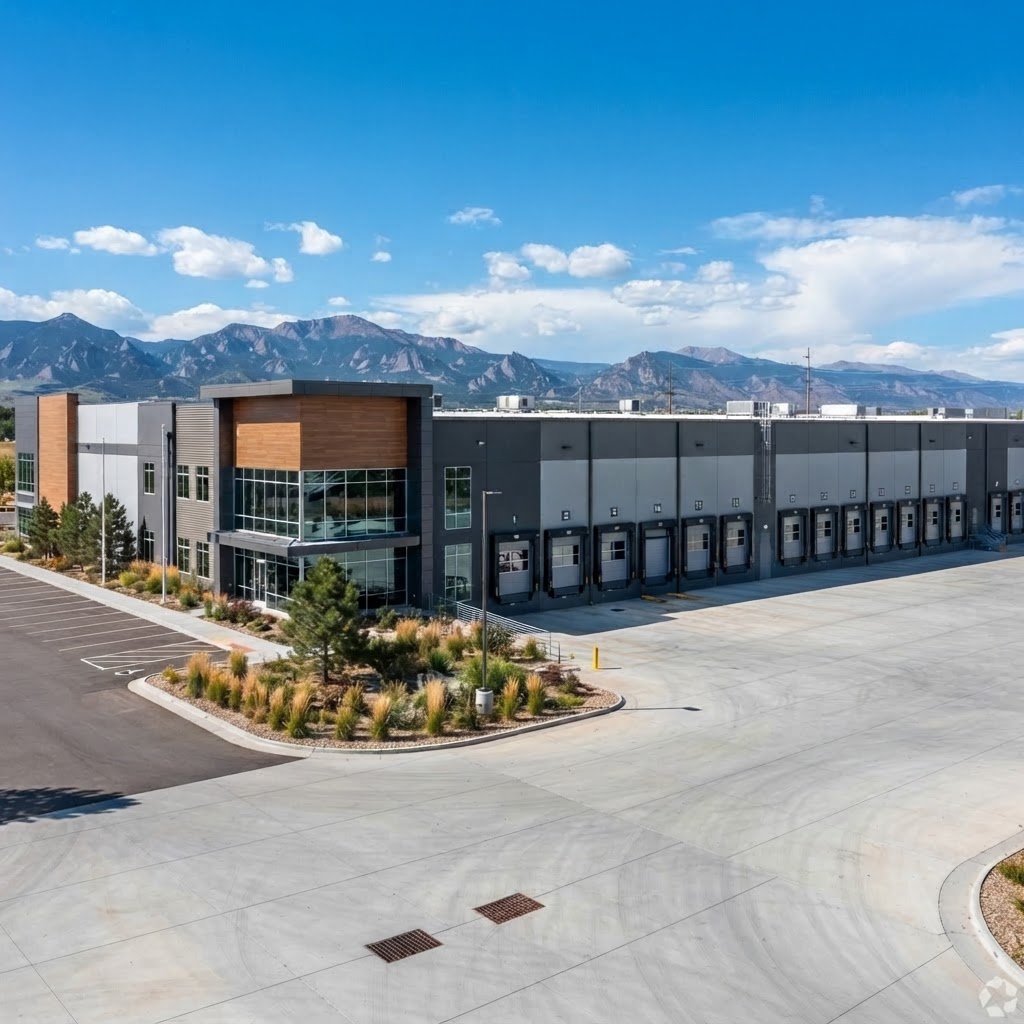
Colorado's Industrial Real Estate Market Is Changing: What Business Owners Should Know
By Laura Frenkel
For much of my career, industrial was the darling of commercial real estate.
I've been a broker for more than a decade, and I watched demand for warehouses and flex spaces grow well beyond the businesses that traditionally occupied them. High ceilings, open layouts, and relatively affordable rents attracted office users looking for something different from a traditional office suite.
Industrial offered flexibility, character, and room to grow. For a long time, it also offered a lower price.
But after years of rising rents, I'm seeing something different in the Denver metro industrial market: more available space, more competition for tenants, and a mismatch between what some landlords expect to receive and what businesses are willing to pay.
For business owners considering a lease, relocation, or renewal, that shift deserves attention.
Industrial Space Isn't the Bargain It Once Was
When I entered the industry in 2010, I remember seeing warehouses lease for as little as $10 per square foot annually on a gross basis.
Today, in the spaces I work with, I often see asking rents around $16 per square foot NNN. Once additional property expenses are included, the annual cost can approach $25 per square foot.
These are examples from my experience, rather than market averages for every industrial property in Colorado. But they illustrate how much the economics have changed.
They also highlight why comparing rental rates requires more than looking at the number on a listing.
A gross rental rate generally includes certain building expenses in the quoted rent. A triple net, or NNN, rate adds the tenant's share of expenses such as property taxes, insurance, and common area maintenance on top of base rent. The exact responsibilities depend on the lease.
A space advertised at $16 NNN can therefore cost substantially more than $16 per square foot. Utilities, maintenance obligations, and improvements may add further costs.
For businesses that originally considered industrial because it was affordable, the total cost matters.
More Available Space Is Changing the Conversation
Over the last few years, I've noticed more industrial spaces competing for tenants.
Published market reports provide some context. Cushman & Wakefield reported overall Denver industrial vacancy of 7.8% in the second quarter of 2026. That figure covers the Denver market rather than all of Colorado, and conditions vary by location and property type.
On the ground, what stands out to me is the gap between some landlords' pricing expectations and the demand they are actually seeing.
An asking rent tells you what a landlord hopes to receive. It does not necessarily tell you what it will take to get a lease signed.
A landlord may be looking back at the strongest years of industrial demand. A business owner is looking at today's available options and asking whether the monthly cost makes sense.
When those expectations don't line up, space can sit.
What Is Driving the Mismatch Between Demand and Asking Rents?
Part of what I believe we're seeing is a change in the businesses that helped fuel Colorado's industrial boom.
Cannabis cultivation and brewing brought demand for warehouses, production facilities, and flexible industrial space. Today, those industries look different from the rapidly expanding markets landlords became accustomed to.
Colorado's Cannabis Industry Has Contracted Significantly
According to the Colorado Department of Revenue, annual marijuana sales fell from approximately $2.23 billion in 2021 to $1.32 billion in 2025—a decline of about 41%. Sales also decreased approximately 5.8% between 2024 and 2025. These figures measure sales dollars rather than production volume or occupied warehouse space, but they show the financial pressure facing the industry.
Reporting on the downturn has documented closures of dispensaries and grow facilities, alongside pressures from oversupply, operating costs, and competition from other states.
For industrial real estate, the question is what happens when a business that once needed a large cultivation or production facility closes, downsizes, or consolidates. That space may return to the market without another cannabis operator ready to take its place.
My interpretation is that this contraction is contributing to weaker demand in some properties and locations. It does not explain every industrial vacancy, but it is an important part of Colorado's story.
Breweries Are Experiencing Closures and Consolidation
Brewing is another industry worth watching. The Colorado Beverage Coalition reported 41 brewery, taproom, and brewpub closures in 2024. Those closures do not all represent industrial buildings, but they illustrate the challenges facing a sector that helped activate many warehouse and flex properties.
The more recent picture is mixed. Colorado Public Radio reported that Colorado craft beer production increased nearly 10% in 2025, even as the state experienced a net loss of 33 breweries. Its reporting also highlighted consolidation among brewing businesses.
That distinction matters. Fewer businesses does not necessarily mean less beer is being produced. But from a real estate perspective, more production by fewer operators may not translate into demand for more separate facilities.
Closures and consolidated operations can leave individual properties looking for replacement tenants, even while successful brands continue to grow.
The Market Is Working Through a Wave of New Construction
Industry changes are only part of the explanation. Supply matters, too.
Cresa's second-quarter 2026 Denver industrial report notes that the market is still absorbing the large wave of development delivered between 2021 and 2024. Although new construction has slowed, that existing supply is giving tenants more choices and putting pressure on landlords to offer concessions and flexible terms.
More vacancy does not always mean demand has disappeared. It can also mean space was added faster than businesses could occupy it.
And available space may not match what businesses need. A large warehouse does not necessarily solve the needs of a small contractor. A former grow facility may require substantial work before it functions for a different user.
The amount of available space is one consideration. Whether that space fits the businesses looking for it is another.
Landlord Expectations Can Take Time to Adjust
This is where I see the disconnect.
Some landlords are still pricing around expectations established during the strongest years of industrial demand. Meanwhile, tenants are comparing more options and evaluating whether the total occupancy cost fits their business.
An owner's purchase price, improvement costs, or financial expectations may explain the rent they want. But those numbers alone do not determine what a tenant can afford or what competing properties will offer.
When expanding supply meets changing demand, pricing expectations sometimes need to adjust.
Sometimes Keeping a Tenant Means Lowering the Rent
I recently spoke with a landlord who was offering a renewal at a rate below what the tenant was currently paying.
The goal was straightforward: keep the tenant.
That conversation reflects a change from the steady increases that defined so much of my experience in industrial leasing.
From a landlord's perspective, retaining a reliable tenant can be worth accepting a lower rate. Losing that tenant may mean months without rental income, along with the expense of preparing and leasing the space again.
I'm seeing situations where landlords need to adjust pricing to get deals done. That can include a lower renewal rate, a reduced starting rent, or other incentives that improve the overall economics.
It won't happen at every property. But business owners should understand that a proposed renewal increase deserves evaluation and negotiation.
What This Means for Business Owners
If you lease industrial space, your next renewal deserves a fresh look at the market.
Even if you want to stay, understanding your alternatives can help you have a more informed conversation with your landlord.
What are comparable spaces asking? How long have they been available? What incentives are being offered? What would moving actually cost?
The answer may be to renew. It may be to relocate. Either way, the decision should reflect current conditions.
If you are searching for a new space, compare the full financial picture:
- Base rent and estimated NNN expenses.
- Annual rent increases.
- Improvements needed before you can open.
- Free rent or tenant improvement incentives.
- Maintenance and repair responsibilities.
- Moving costs and potential business downtime.
A lower rental rate can lose its appeal quickly if the space requires expensive work or creates operational problems.
The Right Space Still Matters More Than the Discount
Industrial is a broad category. A large distribution warehouse, a small contractor bay, and a flex space with substantial office buildout serve different businesses.
More availability across the market does not guarantee that the exact space your business needs will be easy to find.
Location, zoning, parking, loading, power, ceiling height, and layout all affect whether a property will work. An attractive deal only helps if the building supports your operations.
My approach is to start with the business: how it functions today, where it is going, and what it can comfortably afford. Then we evaluate the real estate options that support those goals.
A Different Market Calls for a Different Conversation
Industrial remains an important part of Colorado's commercial real estate market. But the conditions I'm seeing today call for a more thoughtful conversation about pricing, tenant retention, and value.
Landlords need to understand the options businesses have. Business owners need to understand that there may be room to negotiate—even when they plan to stay.
After years of watching industrial rents climb, I'm seeing opportunities to revisit assumptions and make decisions based on today's market.
Considering an industrial lease, relocation, or renewal in the Denver metro area? At VIA Commercial Real Estate, I help business owners evaluate their options and find space that supports their next chapter. Learn more at via-cre.com.

Laura Frenkel
Principal Broker, Via Commercial Real Estate
Laura has 14+ years of experience and 850+ transactions helping Colorado business owners lease, purchase, and grow through smarter real estate decisions. She founded VIA to start the conversation with strategy, not square footage.